Good Place to Live in New York: Building Red Flags Checklist
Good place to live in New York? Use this NYC condo/co-op building red flags checklist to spot compliance, financial, and governance issues early.
Share this insight
Mar 29, 2026
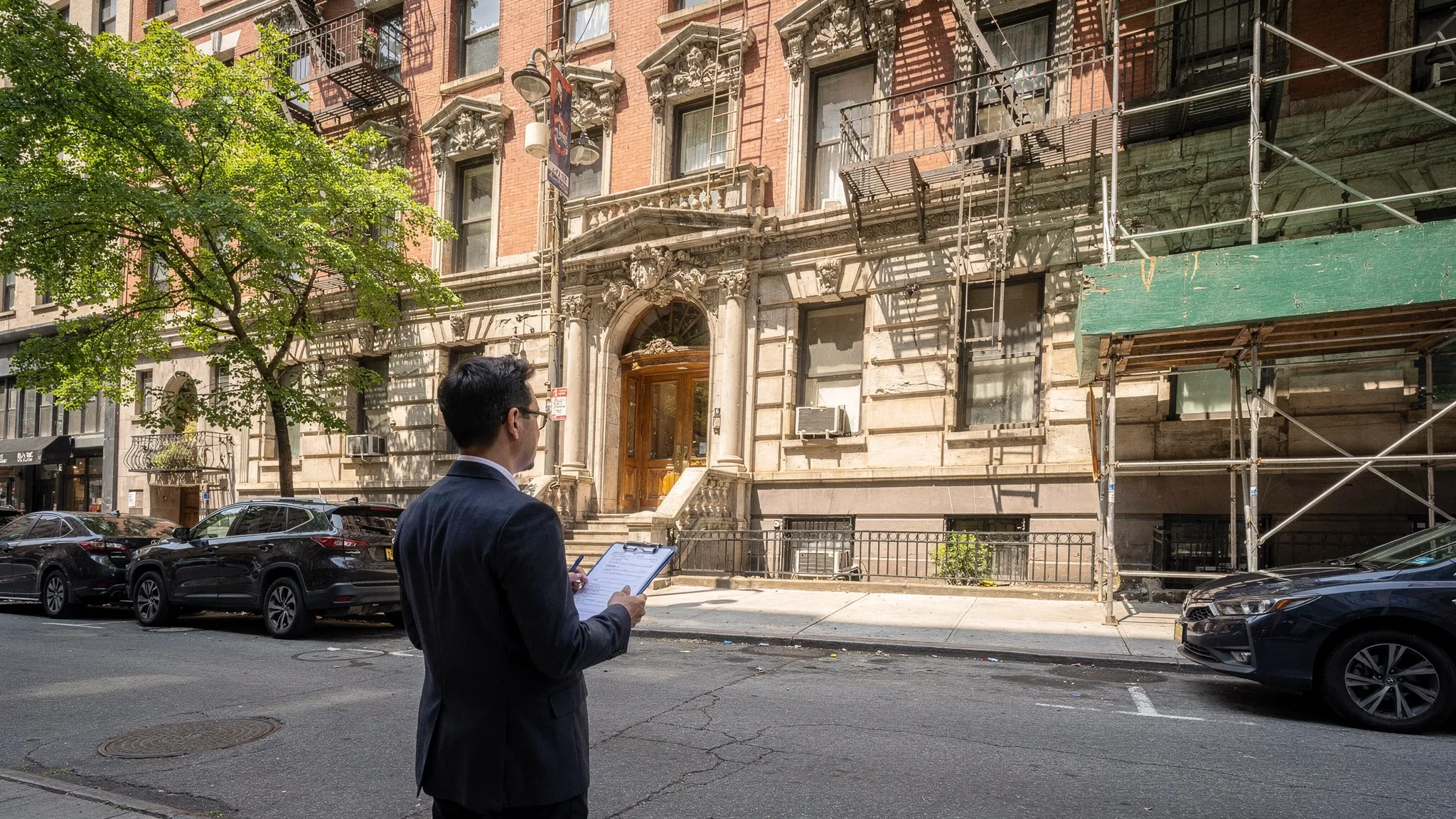
When people search for a good place to live in New York, they usually start with the neighborhood. But in NYC, the building can make or break your day to day life, your monthly costs, and your future resale value.
A well-run condo or co-op feels easy: repairs get handled, deadlines get met, money is predictable, and communication is clear. A poorly run building creates the opposite, surprise assessments, chronic violations, constant “we’re waiting on management,” and a paper trail scattered across inboxes.
This checklist focuses on NYC-specific building red flags you can spot before you buy, rent, or join a board, plus exactly how to verify what you’re being told.
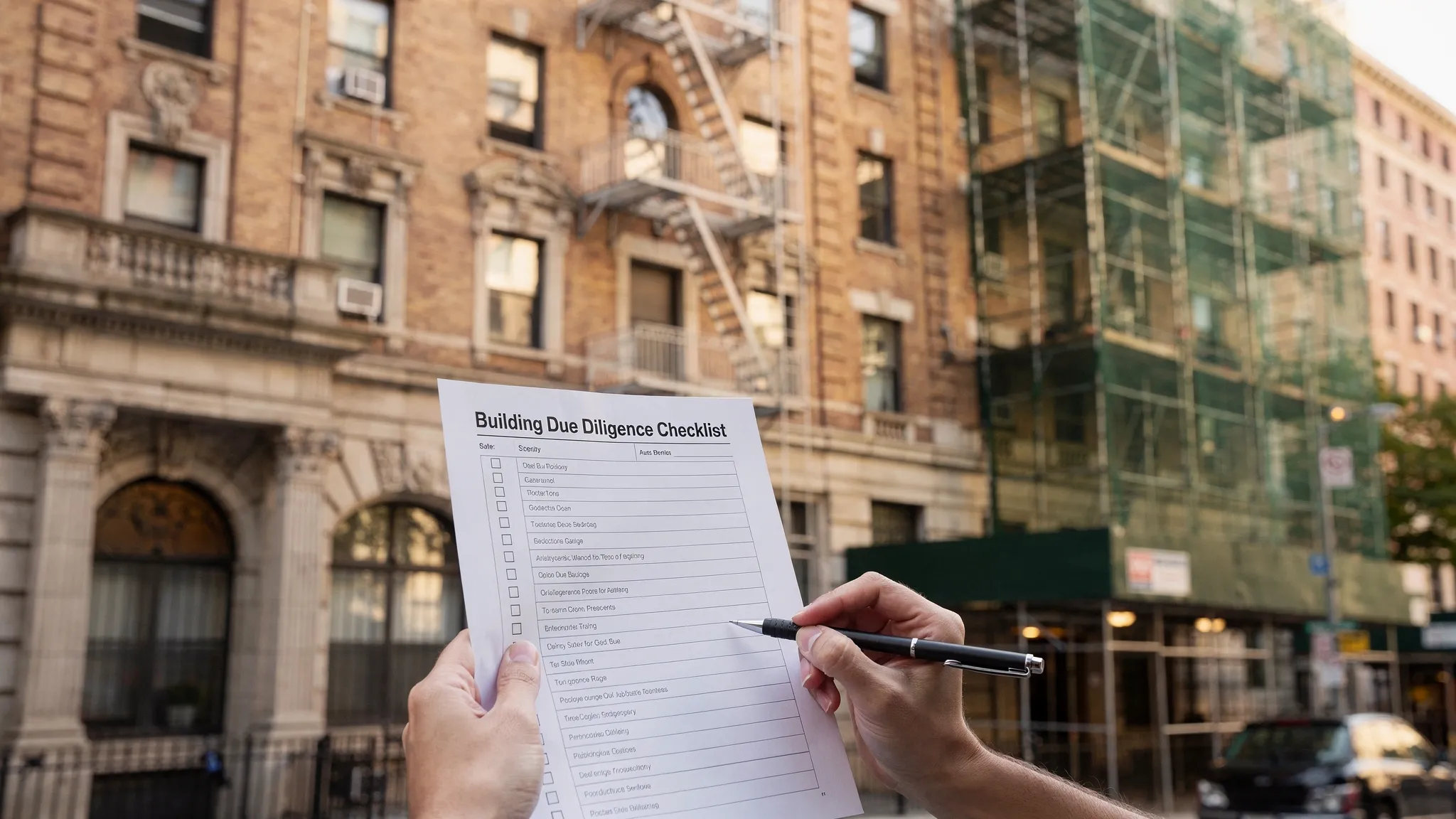
What “good building” really means in NYC
In NYC, “good building” is not just curb appeal or a doorman. It is operational health across five areas:
- Compliance: required inspections, filings, and local laws are tracked and completed on time.
- Physical condition: the building invests in preventive maintenance and plans major repairs.
- Financial stability: budgets are realistic, reserves exist, and arrears are controlled.
- Governance: decisions are documented, rules are clear, and accountability exists.
- Communication: residents and board members can actually get answers without chaos.
If you want a good place to live in New York, you want a building that performs in all five.
Building red flags checklist (NYC condo and co-op edition)
Use the sections below like a punch list. One red flag is not always a dealbreaker, but patterns are.
1) Compliance red flags (the “fines and forced urgency” category)
Red flag: Unresolved DOB or HPD violations, or a casual attitude about them.
Violations can signal real safety issues, neglected maintenance, or an overwhelmed management team. They can also translate into delays for renovations, refinancing, or sales.
How to verify:
- Check NYC Department of Buildings property records via the DOB Building Information Search.
- Check housing-related complaints and violations (especially for multifamily buildings) via HPD Online.
Red flag: “We’re not sure” about facade compliance (Local Law 11 / FISP).
Facade safety is a recurring NYC reality. A building that cannot quickly tell you its last filing, next cycle, and current status may be heading toward expensive, time-sensitive work.
How to verify:
- Ask for the most recent facade filing and engineer report.
- Cross-check background context on NYC’s facade program at the DOB FISP (Local Law 11) page.
Red flag: Gas inspection confusion (Local Law 152).
Local Law 152 requires periodic inspections of gas piping systems for many buildings. Confusion here often means the building is reactive instead of scheduled.
How to verify:
- Ask when the last inspection occurred and when the next is scheduled.
- Read the official overview at DOB’s Local Law 152.
Red flag: Elevator problems are “normal,” or inspection records are hard to produce.
Elevator downtime might be a maintenance issue or a budget issue. Either way, it is a quality-of-life issue that becomes a safety and liability issue if ignored.
How to verify:
- Ask for service contract details, average downtime, and recent modernization discussions.
- Look for patterns in resident communications and board minutes.
Red flag: The building cannot clearly explain Local Law 97 planning.
Even if a building is not immediately impacted, NYC’s emissions law is already influencing capital planning (equipment upgrades, energy projects, budgeting for consultants).
How to verify:
- Ask whether an energy audit or compliance plan exists.
- For background, start with NYC’s official Local Law 97 info.
2) Physical building red flags (the “you will pay later” category)
Red flag: Frequent leaks, recurring mold complaints, or chronic “patch and paint” repairs.
Recurring water intrusion is one of the clearest signs of deferred maintenance. It also tends to generate conflict (who pays, whose contractor, whose insurance).
What to ask:
- What caused the last three significant leaks, and what permanent fix was done?
- Are there active insurance claims tied to water damage?
Red flag: Scaffolding feels permanent, and no one can explain the actual plan.
NYC has plenty of long-running sidewalk sheds, but a well-run building can still explain why it is up, what work is being done, and the timeline.
What to ask:
- Which project is driving the shed (facade, roof, parapet, balcony repairs)?
- What is the approved scope, and what is the estimated completion window?
Red flag: Major systems are near end-of-life, but there is no capital plan.
Roofs, boilers, cooling towers, elevators, and facade components do not fail politely. If replacements are looming, you want to see planning and reserves.
What to ask:
- Is there a written capital plan or reserve study?
- What major projects are anticipated in the next 24 to 60 months?
3) Financial red flags (the “surprise assessment” category)
Red flag: Reserves are thin, but the building has big projects ahead.
A building can run lean and still be healthy if it has low debt, stable expenses, and no major work coming. But in NYC, most buildings face recurring large-ticket items.
What to ask:
- How much is in reserve funds today?
- What is the expected spend on major projects over the next few years?
Red flag: A pattern of assessments or “temporary” charges that keep returning.
One assessment is sometimes rational. Repeated assessments can mean chronic under-budgeting, governance avoidance (keeping common charges or maintenance artificially low), or unplanned emergencies.
What to ask:
- How many assessments occurred in the last five years, and why?
- Were assessments tied to one-time projects, or operating shortfalls?
Red flag: High arrears (owners behind on payments) or vague answers about collections.
Arrears increase pressure on everyone else and can affect financing perception.
What to ask:
- What percentage of units are in arrears, and what is the total amount?
- What is the collection policy and timeline?
Red flag: Financials are hard to obtain, hard to interpret, or constantly “not ready.”
Healthy buildings can produce standard financial packages without drama.
What to ask for (buyers often request these through attorneys or managing agents):
- Recent audited financial statements (if available)
- Current year budget
- Most recent year-end financial package
- Reserve balance detail
- Building insurance summary
4) Governance and process red flags (the “nobody is accountable” category)
Red flag: Board minutes are missing, inconsistent, or nonexistent.
Minutes are not just bureaucracy. They preserve institutional memory, show whether decisions are made formally, and help new board members understand context.
What to ask:
- Are minutes available for the last 12 to 24 months?
- Do minutes reflect votes and decisions, or only vague discussion?
Red flag: Decisions happen in side emails, and nobody trusts the record.
If building decisions live in email chains, you get delays, disputes, and loss of context when board members rotate off.
What to ask:
- How are approvals handled (vendor selection, major repairs, policy changes)?
- Is there an auditable voting process?
Red flag: Bylaws and house rules are hard to find, or selectively enforced.
In co-ops and condos, unclear rules become constant conflict (renovations, sublets, pets, noise, move-in logistics).
What to ask:
- Where are the bylaws, house rules, alteration agreement, and policies stored?
- How are rule updates communicated and recorded?
5) Management and communication red flags (the “daily friction” category)
Red flag: The managing agent is “responsive when they can be,” but there is no system.
A good building does not rely on heroics. It relies on repeatable workflows: requests come in, tasks get assigned, deadlines get tracked, residents get updates.
What to look for:
- A resident communication channel that is not just forwarding emails
- Clear owners of tasks (board, management, vendor)
- Predictable updates on building-wide projects
Red flag: Documents are scattered and constantly re-requested.
When board members can’t locate the last engineer report, the last proposal, or the last version of a policy, work slows down and mistakes increase.
What to ask:
- Is there a centralized document vault?
- Is version control used, or do multiple “final” PDFs float around?
Quick “spot check” table: red flag, why it matters, how to confirm
Use this as a fast scan when comparing buildings.
| Red flag | Why it matters | How to confirm quickly |
|---|---|---|
| Many open DOB/HPD violations | Safety, maintenance neglect, future costs | Search building on DOB and HPD portals |
| Unclear Local Law 11 status | Facade work can trigger major costs | Ask for latest FISP filing and report; review DOB FISP info |
| Repeated assessments | Under-budgeting or deferred maintenance | Review board minutes and recent financials |
| Thin reserves with big projects ahead | Higher likelihood of a large assessment | Ask for reserve balance and capital plan |
| Missing board minutes | Weak governance and poor continuity | Request last 12 to 24 months of minutes |
| “Everything is in email” | Slow decisions, lost knowledge | Ask where docs, votes, and tasks are stored |
| Chronic leaks and patch jobs | Structural or envelope issues | Ask for leak history and permanent fixes |
| High arrears | Financial instability and tension | Ask arrears percent, policy, and aging report |
What to request before you commit (practical due diligence)
If you are buying into a condo or co-op, you are buying into an organization. Your goal is to understand whether the building is planned and disciplined, or constantly reacting.
A reasonable request list often includes:
- Recent financial package(s) and the current budget
- Reserve balance and notes on planned capital work
- Board minutes for the past year or two
- House rules, bylaws, alteration agreement, sublet policy (as applicable)
- Recent engineering reports tied to major projects (facade, roof, elevator)
- Summary of active litigation (if any) and insurance coverage overview
If you are renting, you may not get everything above, but you can still ask targeted questions about building-wide work (scaffolding, elevators, pests, water shutdowns) and request the house rules.
If you’re already on the board: how to turn red flags into an action plan
Many NYC board members read a checklist like this and think, “This is my building.” That does not mean you failed. It means you need systems.
Start with a simple triage approach:
First, get compliance out of panic mode. Gather deadlines (facade cycle, gas inspections, elevator, boiler, annual meetings, tax-related filings where relevant) and put them into a single calendar with reminders.
Second, centralize the record. The goal is one source of truth for governing documents, contracts, proposals, prior reports, and meeting minutes, with version control so you can tell what is current.
Third, formalize decisions. Major work should have documented options, approvals, and an audit trail. That protects volunteers and reduces second-guessing.
Finally, communicate consistently. Residents tolerate bad news better than uncertainty. Regular, predictable updates reduce inbound noise and increase trust.

Frequently Asked Questions
What matters more for a good place to live in New York, the neighborhood or the building? The neighborhood shapes your lifestyle, but the building shapes your daily friction and long-term costs. A well-run building with strong finances and compliance can outweigh a trendier zip code with chronic building problems.
What is the biggest red flag in an NYC condo or co-op building? Repeated emergencies paired with weak documentation: recurring leaks, repeated assessments, missing minutes, and unclear compliance status. That mix signals reactive management and higher future costs.
How can I check NYC building violations myself? Use the NYC Department of Buildings Building Information Search and HPD Online to review complaints and violations tied to an address.
Are assessments always a bad sign? Not always. A one-time assessment tied to a planned capital project can be responsible. The red flag is repeated “temporary” charges with no long-term plan, thin reserves, and vague explanations.
How do I know if a co-op or condo board is well-run? Look for consistent meeting minutes, clear house rules and policies, documented votes, predictable communication, and easy access to current building documents.
Bring order to board work (without living in your inbox)
If you are a volunteer board member trying to keep your building a good place to live in New York, the hardest part is usually not intent, it is organization.
Boardly is built for NYC co-op and condo boards to manage compliance, governance, documents, and communication in one workspace, with tools like an NYC compliance calendar, smart deadline reminders, a document vault with version control, board voting with an audit trail, and an agenda builder with auto-minutes.
Explore Boardly at boardly.nyc to see how it can reduce administrative chaos and help your board stay ahead of deadlines and decisions.
Editor's Note
Ready to stay ahead of every building?
Boardly gives NYC boards and property managers the tools to stay compliant, organized, and on the same page.
Get Started Free