Long Island City in New York: What NYC Boards Should Know
Long Island City in New York boards: compliance deadlines, flood and construction risks, and governance tips for smoother condo and co-op operations.
Share this insight
Mar 26, 2026
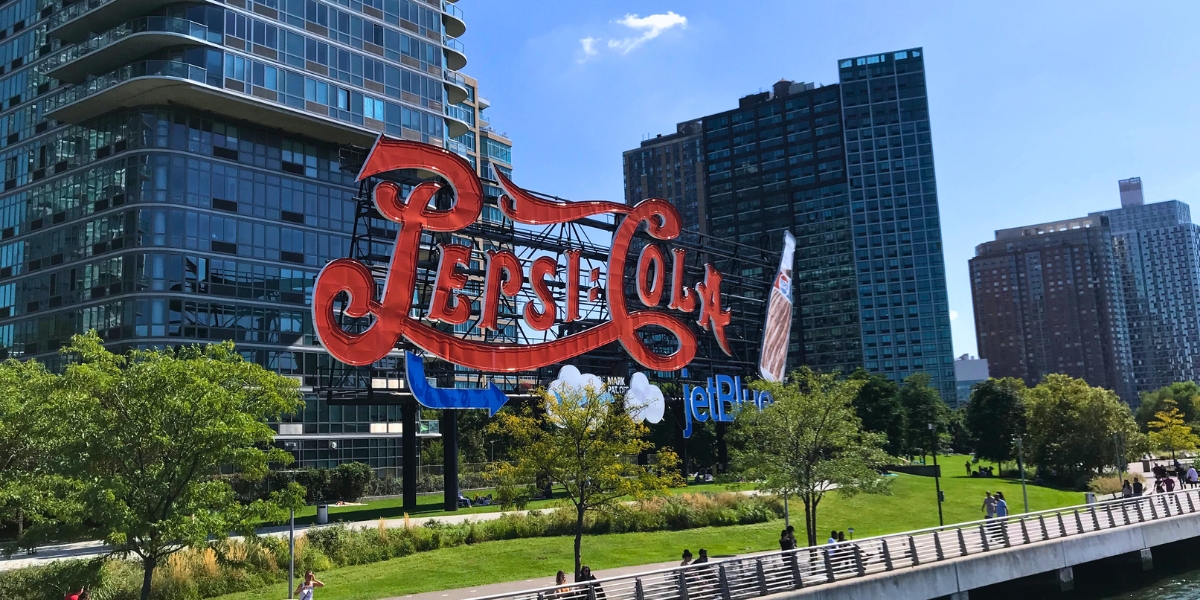
Long Island City (LIC) has transformed into one of New York City’s most active residential markets, with a dense mix of luxury condos, legacy co-ops, and fast-rising new construction. For volunteer board members, that growth is a double-edged sword: more owners, more vendors, more systems to maintain, and more compliance deadlines that do not care how busy your day job is.
This guide breaks down what NYC condo and co-op boards in Long Island City should know, including neighborhood-specific operational realities (waterfront risk, constant construction) and the citywide compliance items that most often create fines, friction, or emergency board meetings.
First, where Long Island City fits in NYC (and why it matters)
Long Island City is in Queens, and many LIC buildings fall within Queens community districts that cover the LIC waterfront and adjacent neighborhoods. Community district boundaries can affect how you route quality-of-life complaints, attend local meetings, or track neighborhood changes (rezoning, construction pipelines, street projects). If you are unsure which district your building is in, the NYC Department of City Planning’s resources on community districts are a reliable starting point.
Practical takeaway: even though most building compliance is citywide, knowing your local channels helps when you are dealing with noise, sidewalk sheds, street closures, sanitation issues, or recurring construction impacts.
LIC’s building mix creates very different board workloads
Boards in LIC often manage one of these scenarios (or a combination):
Newer high-rise condos with complex mechanical systems, elevators, amenities, staff, and vendor-heavy operations.
Older co-ops and smaller multifamily buildings with aging infrastructure and long-term shareholders who expect stability and predictable costs.
Converted or hybrid buildings where legacy conditions meet modern expectations (and sometimes imperfect documentation).
The board workload differs sharply depending on building age and governance structure:
Newer condos tend to have more moving parts (access control, HVAC, cooling towers, amenity rules, package flows), plus higher resident turnover.
Older co-ops may face more capital planning pressure (facade, roofs, boilers, risers) and more sensitive change management.
Either way, boards benefit from two things: a clear compliance system and a clear record of decisions.
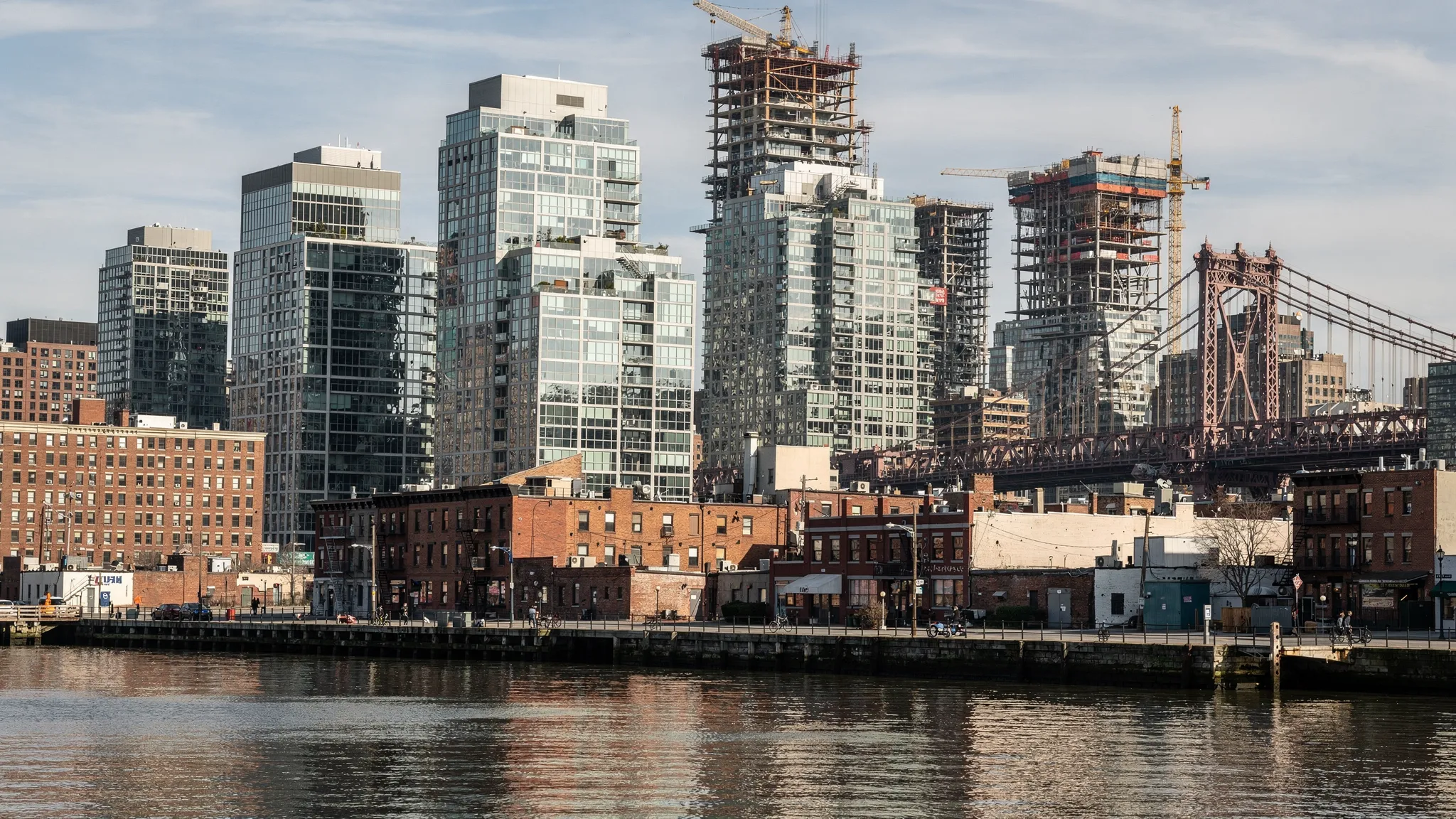
Two LIC realities that routinely affect building operations
LIC boards deal with many of the same regulations as any NYC building, but two local conditions come up repeatedly.
1) Near-constant nearby construction
LIC’s development pace means boards frequently contend with:
Noise, vibration, and resident complaints
Sidewalk access issues and pedestrian safety concerns
Dust and air quality concerns in common areas
Intermittent street closures affecting deliveries and moving
Operationally, this is less about “winning” against construction and more about setting a predictable process:
Publish a single point of contact for complaints.
Log incidents with dates, times, and photos.
Communicate what the building can do (and what it cannot) to avoid misinformation.
Keep board decisions and building responses documented in one place.
2) Waterfront exposure and flood risk planning
Parts of LIC are close to the East River, and some properties fall in or near designated flood hazard areas. This affects insurance conversations, resiliency planning, and capital priorities.
Good next steps for boards:
Check your building’s flood exposure using NYC’s official mapping tools, such as the NYC Flood Hazard Mapper.
Review where critical equipment lives (electric rooms, pumps, boilers, telecom) and whether mitigation is needed.
Discuss flood-related exclusions, deductibles, and coverage details with your insurance professional.
This is not just a “big storm” issue. Smaller events and water intrusion can still cause expensive damage and resident disruption.
The compliance items most likely to create fines or emergencies (NYC-wide)
Most compliance requirements are not unique to Long Island City, but LIC buildings often feel the impact more because they are large, system-heavy, and resident expectations are high.
Below is a practical, board-friendly overview of common NYC building compliance items. Always confirm applicability and deadlines for your specific property with your managing agent, attorney, or qualified vendors.
| Compliance area (common NYC requirement) | What it affects | Typical cadence (varies by building) | Primary NYC source to start |
|---|---|---|---|
| Facade safety (FISP, often called Local Law 11) | Exterior walls, inspections, repairs, sidewalk sheds | Cycle-based program | NYC DOB FISP |
| Gas piping inspections (Local Law 152) | Gas piping systems (where gas is present) | Periodic inspection schedule | NYC DOB Local Law 152 |
| Cooling tower compliance | Legionella risk management, registration, maintenance | Ongoing requirements | NYC DEP Cooling Towers |
| Energy benchmarking (Local Law 84) | Annual energy and water reporting (covered buildings) | Annual reporting | NYC Sustainable Buildings |
| Energy audits and retro-commissioning (Local Law 87) | Audits and system tuning (covered buildings) | Periodic (cycle-based) | NYC Sustainable Buildings |
| Building emissions limits (Local Law 97) | Emissions tracking, penalties, upgrades | Compliance periods | NYC Sustainable Buildings |
What boards in LIC should do with this table:
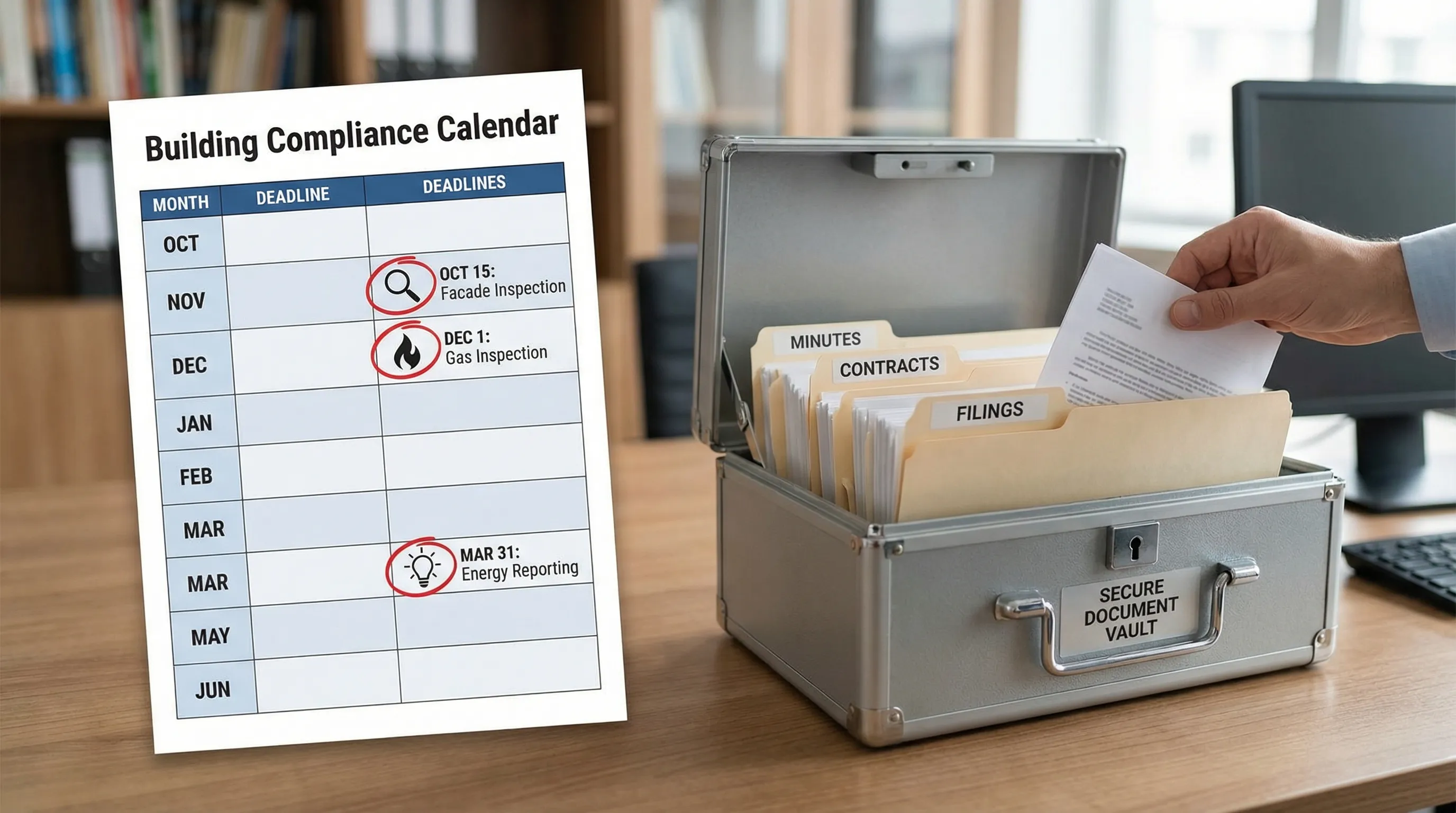
Treat it as a starting map, then build a building-specific compliance calendar.
Keep proof of filing, inspection reports, and sign-offs in a structured document vault.
Assign owners internally (board member, managing agent, vendor) for each compliance line item.
Governance: what tends to break down in busy LIC buildings
In high-turnover, high-density buildings, governance problems often look like “communication issues,” but the root cause is usually missing structure.
Common pain points include:
Board decisions living in email threads with no clear “final” version
Confusion about what was approved, when, and by whom
Difficulty producing records quickly (for owners, lenders, audits, or legal matters)
Meeting agendas that drift, resulting in longer meetings and unclear next steps
A practical governance baseline most boards benefit from:
A consistent agenda template
Clear motions and recorded votes
Centralized minutes and supporting documents
A defined retention and access approach for board records
This is especially important in buildings with sponsor-era history, frequent unit sales, and recurring vendor projects.
Communication: LIC residents expect speed and clarity
LIC buildings often have a mix of owners, renters, and investors, plus residents who travel frequently and rely on mobile-first updates. That changes what “good communication” looks like.
High-impact building communications usually cover:
Planned shutoffs and work windows (water, gas, elevator outages)
Lobby and entry changes (scaffolding, sidewalk sheds, security protocols)
Package and delivery procedures
Amenity rules and reservation expectations
Emergency updates (and post-incident summaries)
Boards that publish fewer, clearer messages generally get better outcomes than boards that publish many fragmented updates.
A simple operating model that works well for LIC boards
When LIC boards run smoothly, they usually do three things consistently.
They manage deadlines like a product roadmap
Not “we’ll deal with it when it comes,” but a living calendar with reminders, owners, and proof of completion.
They treat documents as controlled records
Not scattered PDFs, but a clear folder structure, version control for governing documents, and fast retrieval when needed.
They make decisions auditable
Votes, approvals, and major vendor selections are documented so future boards can understand the rationale without re-litigating the past.
How Boardly supports LIC condo and co-op boards
Boardly is built for NYC boards that need a single workspace for compliance and governance. If you are managing a Long Island City condo or co-op, the features that typically matter most are:
NYC compliance calendar and smart deadline reminders to reduce missed filings
Document vault with version control for governing documents, reports, and submissions
Board voting with audit trail so approvals and decisions are clear
Agenda builder with auto-minutes to keep meetings structured and searchable
Resident portal to centralize building updates and reduce inbox chaos
Bylaw and local law lookup to speed up research and reduce guesswork
SOC 2 compliant security for sensitive building records
If your board is already working with a managing agent, a platform like this can help the board stay organized and informed without adding more manual admin work.
Frequently Asked Questions
Is Long Island City in New York City or separate from NYC? Long Island City is a neighborhood in Queens, one of the five boroughs of New York City.
Do Long Island City condos and co-ops have different rules than the rest of NYC? Most building compliance requirements are NYC-wide, but LIC buildings often face added operational pressure from nearby construction and, in some areas, waterfront flood exposure.
What compliance issues cause the most trouble for NYC boards? The most common issues are missed deadlines, incomplete documentation, and unclear ownership of tasks (who is responsible for filings, inspections, and follow-up repairs).
How can a board reduce resident complaints during nearby construction? Centralize communications, log incidents consistently, share what the building is doing (and what is outside its control), and keep records organized for follow-up with the right agencies and professionals.
What’s the fastest way to get organized as a volunteer board? Start with a single compliance calendar, a document vault for all official records, and a repeatable meeting workflow (agenda, minutes, decisions, tasks).
Bring order to compliance and communication in your LIC building
If your Long Island City board is juggling deadlines, documents, votes, and resident updates across email threads and shared drives, consolidating everything into one workspace can dramatically reduce friction.
Boardly is designed for NYC condo and co-op boards to stay organized, meet compliance deadlines, and collaborate clearly. Learn more at Boardly.
Editor's Note
Ready to stay ahead of every building?
Boardly gives NYC boards and property managers the tools to stay compliant, organized, and on the same page.
Get Started Free