Moving to New York City: Board Intake Packet Checklist
Moving to New York City? Use this NYC co-op/condo board intake packet checklist to onboard new residents smoothly and avoid move-day and renovation issues.
Share this insight
Apr 7, 2026
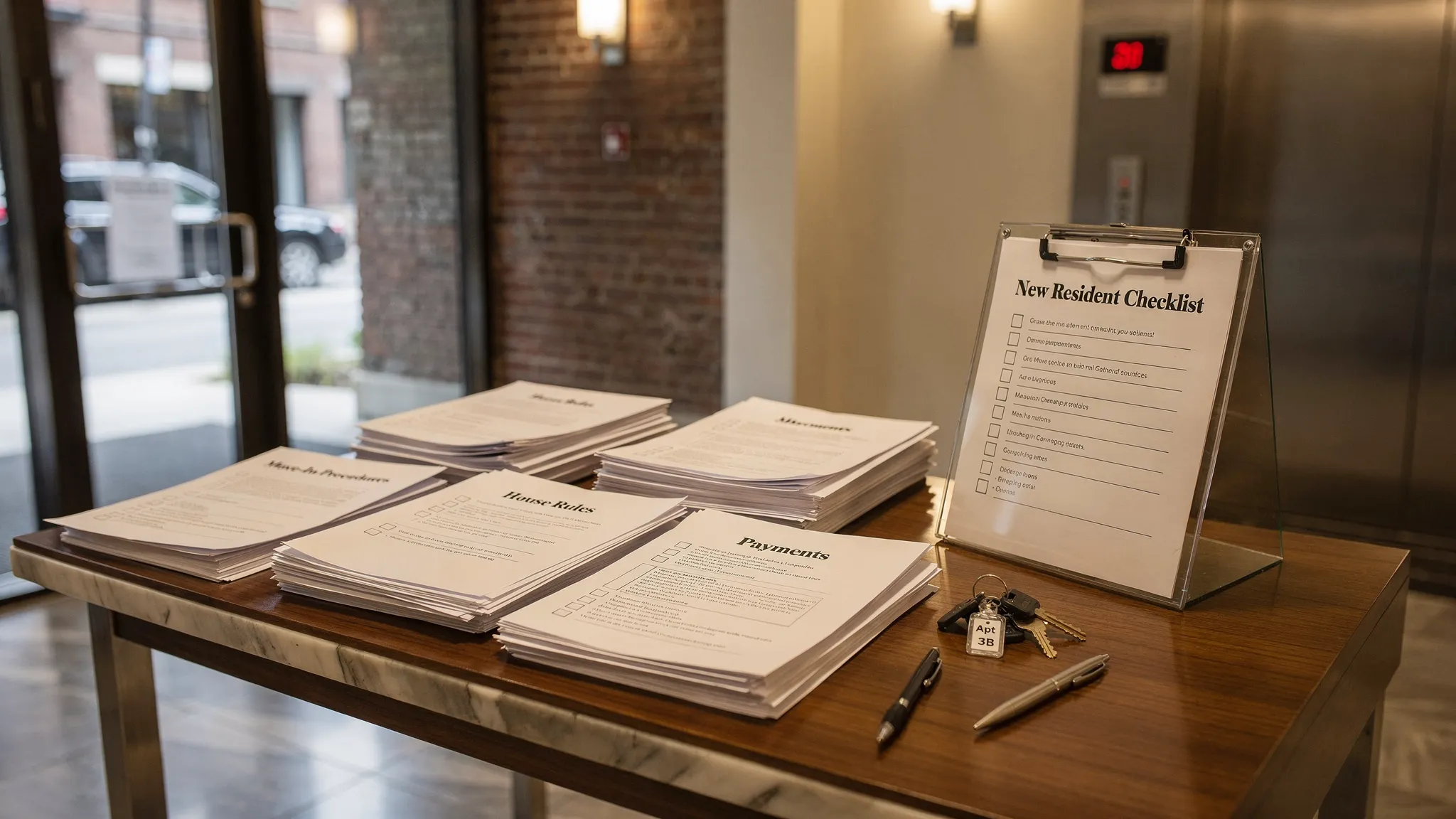
If your building has even a few move-ins a year, you’ve seen the same problems repeat: elevator confusion, scratched lobby walls, uninsured movers, “I didn’t know that rule,” and renovation plans that should have been stopped on day one. An intake packet fixes most of that, but only if it’s NYC-specific and written for how co-ops and condos actually operate here.
This is a practical checklist for a board intake packet (the set of documents and forms you give a new owner, shareholder, or approved subtenant right after approval and before move-in).
Board intake packet checklist (NYC co-op and condo)
Use this as your baseline, then trim anything you truly don’t need. The goal is one packet that prevents 80 percent of the avoidable back-and-forth.
| Section | Include | NYC notes (what usually bites boards) |
|---|---|---|
| Welcome + “how this building works” | One-page summary: who manages what (board vs managing agent vs super), where to send requests, expected response times | Set expectations early, small buildings get overwhelmed by ad hoc texts and hallway conversations |
| House rules / Rules & Regulations | Current rules, quiet hours, smoking policy, pets, short-term rentals policy, hallway storage, bike storage | Be explicit about move hours, weekend work, and noise, NYC density makes enforcement personal fast |
| Governing docs (only what residents actually use) | Co-op: house rules + key proprietary lease excerpts (alterations, sublet, nuisance). Condo: rules + bylaws excerpts (use restrictions) | Don’t dump a 400-page PDF and call it onboarding, pull the parts that drive daily conflict |
| Move-in / move-out procedures | Scheduling, elevator reservation (if you have one), hallway protection, required COI, move deposit, fees, loading instructions | Include exact “where the truck can stop” guidance for your block, NYC double-parking wars are real |
| Keys, fobs, intercom, mailbox | Request form, costs, pickup process, intercom directory rules, mailbox labeling | Clarify lead time, boards get blamed when access isn’t ready on day one |
| Alteration / renovation rules | Alteration agreement, insurance requirements, required permits, work hours, debris removal, neighbor notice rules | NYC work without permits happens constantly, make “no work starts until approved” unmissable |
| Insurance requirements (resident + contractors) | Owner/renter policy expectations (if any), contractor COI template, endorsement requirements, additional insured language | Don’t rely on verbal assurances, keep a standard COI template that your building accepts |
| Building systems basics | Heat/AC type, radiator guidance (prewar), shutoff rules, breaker basics, who to call for leaks | In older stock, “my radiator is leaking” becomes a building incident quickly |
| Safety + emergency info | Emergency contacts, building evacuation notes, gas leak protocol, water leak protocol, boiler room access rules | Link to FDNY guidance where relevant, and keep it simple and operational |
| Packages + deliveries | Package location rules, carrier access instructions, oversized deliveries, move-day delivery conflicts | If you don’t have staff, define what you can’t do (no accepting freight, no storage) |
| Trash, recycling, composting | Your building’s specific sorting rules + where bins live + pickup days | NYC rules change and residents guess, link to DSNY for basics and specify your in-building process |
| Pest management | Reporting process, prep requirements for treatment, prohibited DIY actions (foggers) | Bedbugs and roaches are process problems, not just pest problems |
| Payments + recurring building info | Monthly maintenance/common charges, payment method, late fees, move deposit refund timeline | Confusion here creates arrears early, especially with new-to-NYC owners |
| Contacts directory | Managing agent, super/porter, board email (not personal emails), after-hours emergency line | A shared board email beats one member becoming the human ticketing system |
| Acknowledgements + signatures | House rules acknowledgement, alteration policy acknowledgement, emergency contact form | Make it signable digitally, otherwise it never comes back |
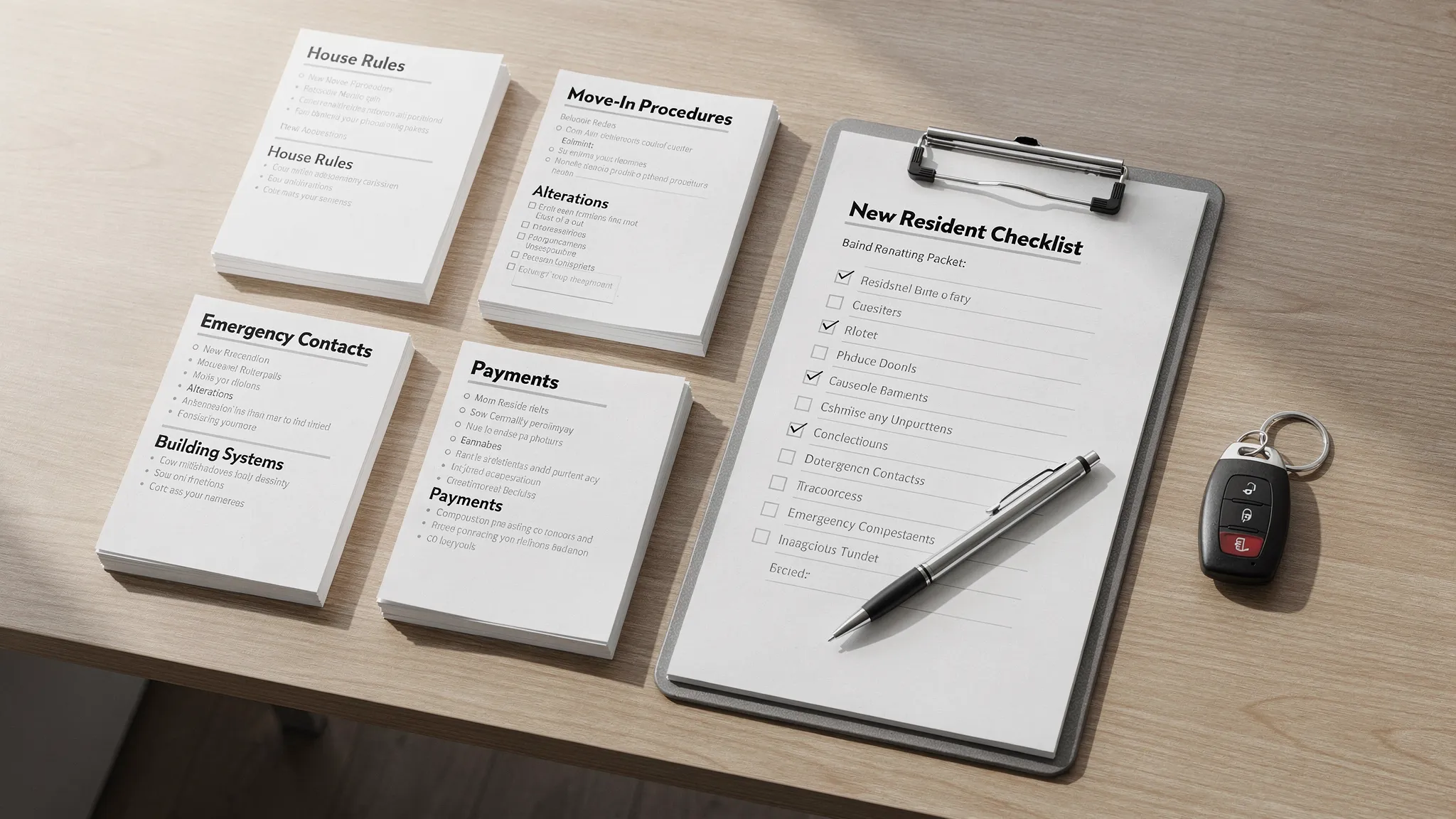
The “move-in” page that prevents the most damage
If you only tighten one thing, tighten move day. In NYC, move logistics are where small buildings get chewed up: tight curbs, narrow lobbies, cranky neighbors, and movers who default to whatever is fastest.
Your packet should include a single move-in instruction page that answers, in plain language:
- When moves are allowed (days/hours) and whether you require board/agent confirmation.
- Where the truck may stop and which entrance to use.
- What must be protected (elevator cab, hallway corners, lobby floor) and who supplies protection.
- Certificate of Insurance (COI) requirements (limits, additional insureds, address wording).
- Deposit and fee rules (amount, how to pay, what triggers forfeiture, refund timing).
If your building has an elevator, also include the basics on reserving it and whether you require a service key. If you don’t have an elevator, be explicit about stairwell protection and prohibited shortcuts (dragging, propping doors).
Alterations: say “no work starts” in three different places
Most board headaches that feel “legal” start as an operations failure: someone begins work before you have the right paperwork.
Your intake packet should make these points unavoidable:
- No work starts until written approval (board and/or managing agent, per your building’s process).
- DOB permits are the resident’s responsibility when required, and unpermitted work can trigger stop-work, fines, or building access restrictions.
- Work hours (weekday windows, weekend bans if you have them) and noise expectations.
- Wet work rules (water shutoffs, advance notice, licensed plumber requirements).
For reference, residents who want to argue “it’s just cosmetic” often don’t understand where NYC draws lines. Linking to the NYC Department of Buildings overview of permits and filings can reduce bad-faith debate because it’s not coming from you: see the NYC DOB permits/filings resources.
NYC-specific building realities worth spelling out
Even if you’ve lived in your building for years, a new-to-NYC resident might not understand how quickly a small issue becomes a building incident.
Prewar heat and radiator behavior
If you’re in classic prewar stock, include a short, practical note on:
- Steam radiator basics (hissing is normal, leaking is not).
- What residents should never do (taping vents shut, “fixing” valves).
- When to call the super versus when to notify management/board (active leak, ceiling stain, repeated hammering).
This is less about education and more about getting residents to report the right thing to the right person before damage spreads.
Trash and recycling that matches your basement, not a brochure
Point people to DSNY for citywide basics, but make your packet building-specific: which bins, where, and when. DSNY’s main hub is here: NYC DSNY recycling rules.
What boards should add (because DSNY won’t): “Break down boxes or don’t bring them downstairs,” “No leaving bags outside the chute door,” and “Bulk disposal must be scheduled.”
Smoke/CO alarms and basic fire safety expectations
You’re not rewriting the Fire Code, you’re setting expectations. Include what residents must do when an alarm chirps, and who replaces what in your building.
If you want one authoritative external reference, use FDNY/NYC resources on smoke and carbon monoxide alarms: FDNY fire safety information.
Make the packet easy to use (and easy to maintain)
The best intake packet is the one you can actually keep current. In small NYC buildings, the failure mode is predictable: one board member has the latest version, approvals happen by email, and six months later nobody can find what was sent.
A practical approach:
- One “current” packet link (PDF + fillable forms), not attachments floating around.
- Version date on the first page so you can tell what someone received.
- A single intake checklist for your side (what you must receive before keys are released).
- One shared board mailbox for intake (so the treasurer isn’t also the intake coordinator forever).
If your building is still juggling Google Drive folders, forwarded emails, and paper binders, intake is where the cracks show first. Centralizing the packet, signatures, and supporting documents in one place is less about “software,” and more about not losing institutional memory every time board roles rotate.
Quick gut-check: what should never be “verbal”
If it creates conflict, money loss, or physical damage, it belongs in writing in the intake packet. At minimum, don’t leave these to hallway conversations:
- Move hours and protection requirements
- COI requirements and deposit rules
- Alterations approval and work hours
- Where to report leaks and after-hours emergencies
- Payment method and late fee policy
A clean intake packet won’t stop every problem, but it will stop the avoidable ones, and it will make enforcement feel consistent instead of personal. That matters in NYC, where everyone lives close enough to take every rule as a direct comment on how they live.
Editor's Note
Ready to stay ahead of every building?
Boardly gives NYC boards and property managers the tools to stay compliant, organized, and on the same page.
Get Started Free