New York City Address Format: Fix Unit, Line 2, and Care Of
Fix your New York City address format for units, Line 2, and c/o so mail, invoices, and legal notices reach the right owner every time.
Share this insight
Apr 4, 2026
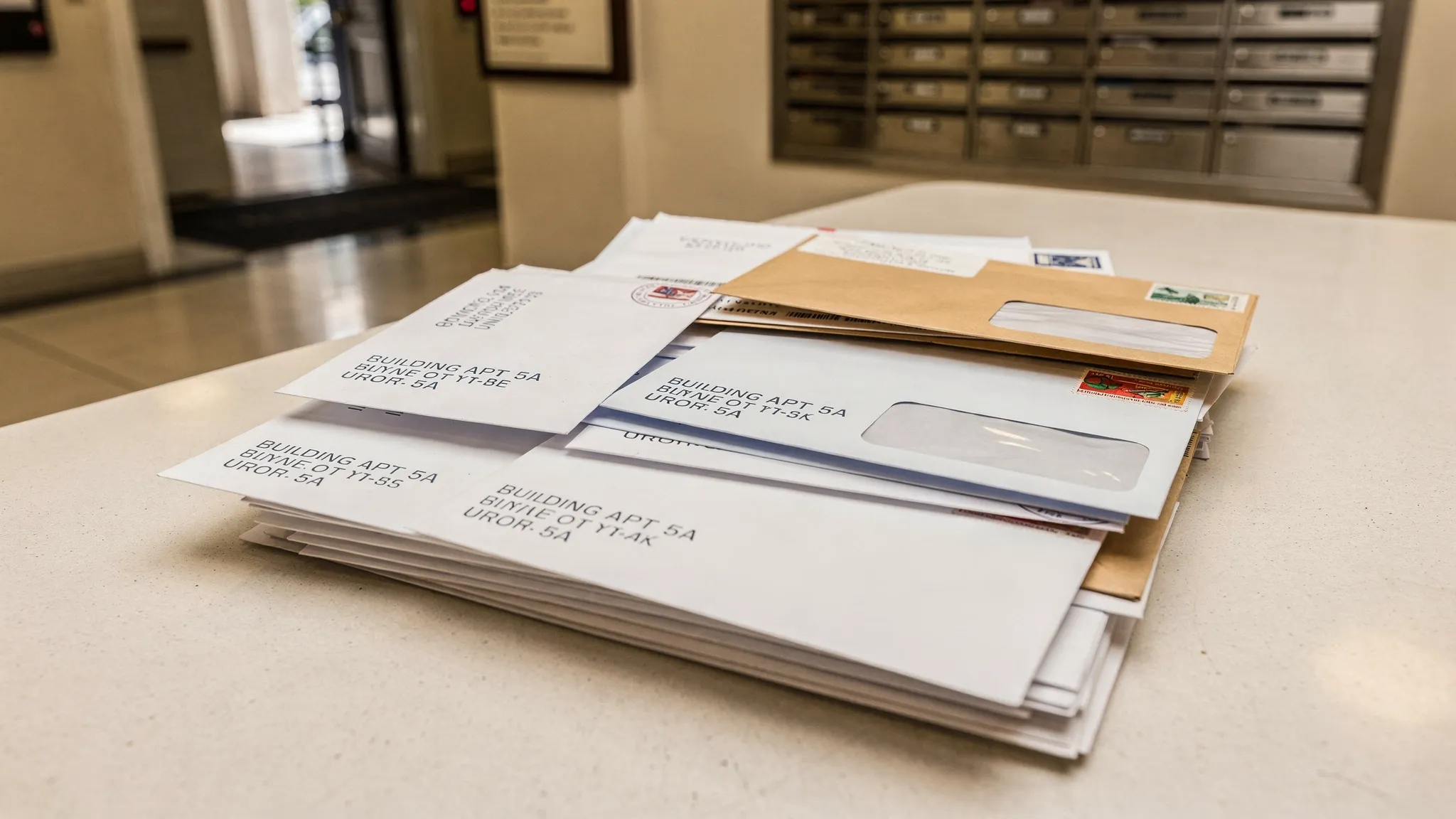
If your building has ever had a returned HPD notice, a vendor invoice that “never arrived,” or shareholder mail delivered to the wrong unit, you already know this: address formatting is operations.
In NYC co-ops and condos, the pain point is usually the same. People write addresses the way they say them (“5A,” “#5A,” “Unit 5-A,” “Care of the super”), and your building ends up with five different “official” versions of the same unit address across banks, insurers, vendors, owners, and agencies.
Here’s a practical New York City address format that works for boards, and how to fix the three fields that cause most issues: Unit, Address Line 2, and c/o (care of).
The baseline: what USPS and agencies expect
For mail and most administrative purposes, you want an address that fits cleanly into the standard 4 lines:
- Recipient name (person or entity)
- Secondary unit designator (APT, UNIT, STE) and unit number (this is “Line 2” on most forms)
- Street address
- City, state, ZIP
USPS’s general guidance is in Publication 28. You do not need to memorize it, but you should standardize your building’s output to match it.
Fixing the unit: pick one format and enforce it
In NYC, “Apartment 5A” can appear as:
- 5A
- Apt 5A
- APT. 5A
- #5A
- Unit 5-A
- 5 A
For deliverability and consistency, boards should standardize on:
- APT 5A for apartments
- UNIT 5A only if your building truly uses “Unit” as the official designator everywhere
- PH A, LF, BSMT only if those are the actual unit identifiers used in your building documents
What to avoid:
- # (many systems reject it or misread it)
- Extra punctuation (it creates mismatches across systems)
- Making up a unit label (“FL 5” when the unit is actually 5A)
NYC-specific gotcha: condos with “Line” numbers
Some condos (especially new-ish developments) have internal “line” designations (like “05 line”) that people casually use to describe exposure or layout. That is not a postal unit. If you need the layout info for operations, keep it in your unit roster notes, not in the mailing address.
Fixing Address Line 2: it has one job
On most forms, Address Line 2 is where the unit goes. Not the building name, not the neighborhood, not “near Central Park.”
Use Line 2 for one (sometimes two) of these items, in this order of priority:
- Unit (APT 5A)
- c/o (if needed for delivery)
- ATTN (if you must route inside an organization)
If you put the unit in Line 1 because “there wasn’t room,” you are creating a future mismatch when someone else types it “correctly.” That mismatch matters when you are reconciling owner lists, vendor W-9s, insurance certificates, and mailing lists.
Good NYC examples
JANE DOE
APT 5A
123 W 72 ST
NEW YORK NY 10023
THE 123 W 72ND STREET CONDOMINIUM
C/O ABC MANAGEMENT LLC
123 W 72 ST
NEW YORK NY 10023
Fixing c/o (care of): use it only when delivery depends on it
c/o tells the carrier, “Deliver this to the person or entity that will actually receive it.” In building operations, it comes up constantly, and it is often misused.
Use c/o when:
- An owner’s mailing address is your building, but they want mail routed to a managing agent, attorney, or another recipient.
- The legal owner is an LLC or trust, but an individual actually receives mail.
- You are addressing something to the building entity, but it must land with the managing agent or a specific office.
Do not use c/o just to be descriptive (“c/o Super,” “c/o Doorman”) unless that person is reliably responsible for receiving that mail. Otherwise you are making delivery dependent on staffing.
Where c/o goes
Most systems handle this best:
- Line 1: Legal recipient (person/entity)
- Line 2: C/O Actual recipient
Example:
123 WEST 72ND STREET OWNERS CORP
C/O MARIA LOPEZ, TREASURER
123 W 72 ST
NEW YORK NY 10023
If you also need a unit (rare for a building entity), keep the unit in Line 2 and move c/o into Line 1 after the name if the form allows it. The goal is consistent, not perfect.
Common board scenarios (and how to format them)
| Scenario | Line 1 | Line 2 | Notes |
|---|---|---|---|
| Owner occupant | Jane Doe | APT 5A | Keep unit consistent across all owner records |
| Owner with alternate mailing address | Jane Doe | (blank) | Use their external street as Line 3, do not force your building address |
| LLC owner, mail goes to a person | 5A HOLDINGS LLC | C/O JANE DOE | Keep LLC as recipient for governance and legal notices |
| Building entity, mail goes to managing agent | 123 MAIN STREET OWNERS CORP | C/O XYZ MANAGEMENT LLC | Useful for bank accounts, insurance, vendor contracts |
| Vendor billing contact inside a big company | ACME ELEVATOR CORP | ATTN ACCOUNTS RECEIVABLE | ATTN is for internal routing, not delivery |
NYC address details boards should not “clean up”
A few NYC-specific items cause accidental errors when someone tries to standardize:
- Queens hyphenated house numbers (example: 37-12 73 ST). Do not remove the hyphen.
- Directional and suffixes matter (E, W, N, S, ST, AVE, RD). Keep them as written.
- Neighborhood names are not part of the address. “Brooklyn” belongs in City, but “Williamsburg” does not belong anywhere.
- Use the correct city name. Many Brooklyn and Queens addresses still work with “BROOKLYN NY” or “LONG ISLAND CITY NY” depending on ZIP. Follow the USPS city for that ZIP.
Make it operational: one “official address” per unit and per entity
Boards do not need a 20-page policy. You need a single source of truth.
Create (and maintain) three standardized lists:
- Unit roster: Unit identifier (APT 5A), legal owner name, mailing address (formatted), email, phone.
- Building entity address: Exactly how the co-op/condo should be addressed, plus the correct c/o for the managing agent (if any).
- Vendor and professional directory: Exact remit-to / notice address from contracts and W-9s.
This is where boards usually stumble: the address “lives” in someone’s inbox, a PDF, a spreadsheet, and a bank portal, all slightly different. Centralizing it in one place (and treating changes like any other building record change) prevents the churn.
If you are already using a board platform to centralize documents and operations, store your address standards and your current rosters next to the documents they support (house rules, proprietary lease/bylaws, insurance, vendor contracts). It saves real time when the treasurer changes, when you refinance, or when you have to prove who was notified and where.
A quick consistency check your board can run this month
Pick 10 units and compare the exact formatted address across:
- The unit roster you use for notices
- Your bank account owner records
- Your insurance named insured and mailing address
- One vendor contract invoice address
If you see “APT 5A” in one place and “#5-A” in another, you have a fixable process problem, not a mail problem. Standardize it once, then reuse the same formatted address everywhere.
Editor's Note
Ready to stay ahead of every building?
Boardly gives NYC boards and property managers the tools to stay compliant, organized, and on the same page.
Get Started Free