Place to Live in New York City: Operational Red Flags by Building
A place to live in New York City depends on the building. Board-focused red flags: DOB/HPD violations, Local Law 11, boilers, elevators, doc chaos.
Share this insight
Apr 17, 2026

When someone says “this is a great place to live in New York City,” they usually mean the neighborhood. Boards know the truth is more boring: the building’s operations decide whether daily life is smooth or a constant stream of complaints, emergency calls, and surprise assessments.
Below are the building-level operational red flags that quietly make a building a bad place to live, and a miserable place to govern. This is NYC-specific and biased toward small co-ops and condos where problems land directly on volunteers.
1) Compliance problems you cannot “catch up” on quickly
Overdue facade cycle (FISP, aka Local Law 11)
If your building is behind on facade filings, you are not just “late on paperwork.” You are exposed to:
- Scaffold that stays up for months longer than planned
- Higher bid prices because contractors know you are under pressure
- DOB scrutiny, penalties, and a harder time scheduling quality firms
Confirm status on the DOB property profile and FISP pages, and keep the full filing history in one place (not scattered across emails).
Relevant reference: NYC DOB Facade Inspection & Safety Program (FISP)
FDNY and fire safety items that stall everything else
In a lot of NYC buildings, fire safety work becomes the “hidden project” that blocks other capital planning. Watch for recurring issues around alarm panels, standpipes/sprinklers (if applicable), or inspection sign-offs that never seem to close.
Operational tell: you cannot produce a clean, dated set of inspection reports and close-out letters without digging through someone’s personal inbox.
2) Chronic building systems issues (the quality-of-life killers)
Heat and hot water instability
In co-ops especially, nothing triggers more resident frustration than heat and hot water problems. Red flags include:
- The same vendor returning repeatedly for “band-aid” boiler fixes
- No recent burner/boiler documentation that a new board can understand
- No written standard for complaint handling (who logs it, how fast, what counts as “resolved”)
NYC reality: residents will compare you to other buildings on the block, even if your equipment is older. Your only defense is consistent operations and a paper trail.
Roof leaks and repeated “mystery water”
If you have recurring leak complaints, you likely have a documentation problem as much as a construction problem.
Red flags:
- No roof history (patches, proposals, warranties) that survives board turnover
- Unit-to-unit disputes because nobody can trace when leaks started and what was tried
- Insurance claims that are weak because dates and photos are missing
This is where simple organization pays off: a single running log of leaks, photos, and vendor work orders can stop the same argument from happening every year.
Elevator downtime without a clear maintenance story
Elevator issues hit accessibility, deliveries, and resident patience immediately. If your elevator is frequently out, ask whether the board can answer, in plain English:
- What is the maintenance contract scope?
- What are the recurring failure points?
- When was the last modernization, and what is the likely timeline for the next one?
If you cannot answer those without calling the vendor, you are operating blind.
3) High-violation buildings (paperwork reflects reality)
A building with lots of open items at DOB or HPD is often telling you something true: work is deferred, management is disorganized, or nobody is closing the loop.
- DOB violations can indicate unpermitted work, unsafe conditions, or unresolved inspections.
- HPD violations (even in co-ops and condos) often track habitability complaints and recurring building conditions.
Where boards actually check (and should save screenshots/PDFs into the building records):
- DOB Building Information Search
- HPD Building Information
4) Financial red flags that become operational emergencies
Boards often frame finances as “accounting,” but in small buildings it quickly turns into operations: no cash means no options.
A pattern of surprise assessments
Assessments happen, but a pattern of “we didn’t see it coming” is an operational red flag.
Common root causes:
- No credible capital plan (even a simple 5-year view)
- Vendor proposals living in email, not in an organized project record
- No consistent way to track what the building already repaired, replaced, or deferred
Weak reserve story (and no shared narrative)
Residents can tolerate bad news. They do not tolerate confusion.
If the board cannot explain reserves and upcoming work in a consistent, documented way, you get:
- More shareholder drama, more rumors
- More meeting time spent re-litigating old decisions
- More distrust when you actually need to act fast
5) Governance and document chaos (the silent red flag)
This is the one boards underestimate because it feels “administrative.” In practice, it is the foundation for everything else.
Red flags:
- You cannot locate the latest house rules, alteration agreement, or sublet policy without asking “who has it.”
- Board votes are not captured cleanly (or minutes exist but are not findable).
- A new treasurer or secretary “rebuilds the system” every year.
Operational impact: even when the building is physically fine, residents experience chaos as slow approvals, inconsistent answers, and avoidable conflict.
This is exactly where a lightweight platform can help: one place for governing docs, vendor contracts, meeting notes, and board communications, so the building’s memory is not tied to a single volunteer.
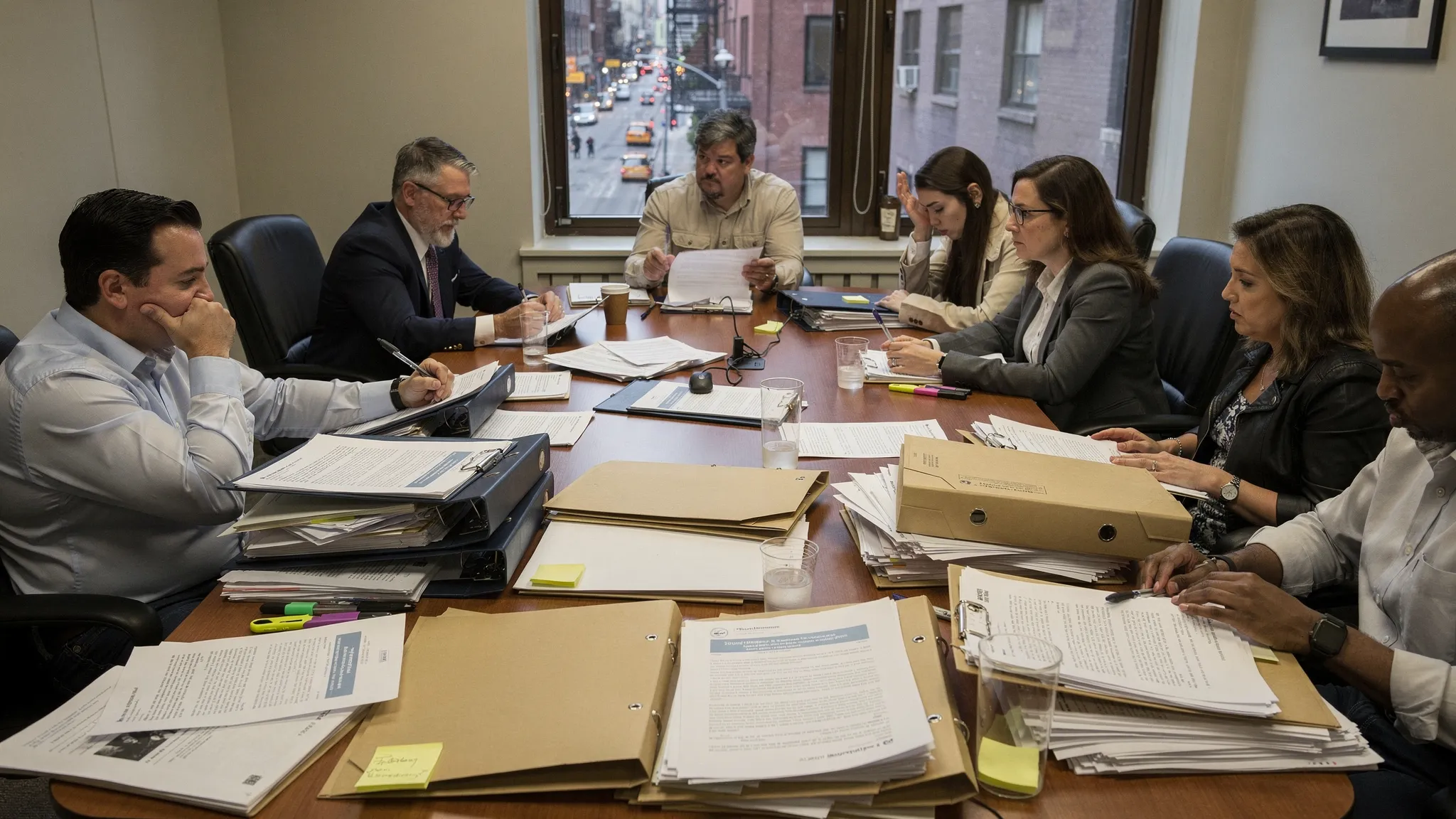
Quick reference: red flags and what they mean
| Red flag | Where to confirm | What it usually means for boards |
|---|---|---|
| Overdue facade cycle (FISP/Local Law 11) | DOB property profile, FISP history | Expensive work under time pressure, long scaffold time, resident disruption |
| Many open DOB items | DOB Building Information Search | Unpermitted work, deferred maintenance, poor close-out discipline |
| Many open HPD violations | HPD Building Information | Recurring conditions and slow response workflows |
| Repeat boiler/heat failures | Vendor history, service tickets | Short-term fixes, missing maintenance record, high complaint volume |
| Repeat roof leaks | Work orders, warranties, claims file | No project continuity, disputes, insurance headaches |
| Frequent elevator downtime | Maintenance contract + call logs | Under-scoped contract, aging equipment, unclear modernization plan |
| Repeated surprise assessments | Financials + board minutes | Weak capital planning and weak documentation of prior decisions |
| Documents scattered across inboxes | Reality check: can a new board find them? | Slow decisions, inconsistent enforcement, more conflict |
What to do if you spot these in your own building
Start with actions that reduce risk fast, without turning into a six-month “process project.”
- Centralize the latest versions of core docs: governing docs, house rules, alteration package, insurance, key contracts.
- Create a simple “building calendar” for recurring compliance and inspections (facade cycle dates, boiler service cadence, elevator inspections, annual meeting, tax filings).
- For each major system (facade, roof, boiler, elevator), maintain a single running record: proposals, approvals, work performed, warranties, and photos.
If you are already doing the work but it lives in five different board members’ email threads, that’s not “fine.” It is one resignation away from becoming a crisis.
Frequently Asked Questions
What is the fastest way to tell if a NYC building has operational issues? Check open items at DOB and HPD, then compare that to what your board can actually document (contracts, filings, close-outs, and a coherent maintenance history).
Is a Local Law 11 (FISP) project automatically a red flag? No. Every facade needs cycles. The red flag is being behind, not having a clear scope and plan, or not being able to produce prior reports and filings.
Why do small co-ops and condos struggle more with these issues? Fewer staff, fewer committee members, and less institutional memory. When documents and decisions are not centralized, turnover creates operational amnesia.
What’s the most preventable red flag? Document chaos. You cannot control the age of your roof, but you can control whether your board can find the warranty, past proposals, and the last repair history in two minutes.
If your building’s records are scattered across personal inboxes and shared drives, consider consolidating them into one place. Boardly is built for NYC co-op and condo boards that want simple document centralization and board communication without heavyweight property management software.
Editor's Note
Ready to stay ahead of every building?
Boardly gives NYC boards and property managers the tools to stay compliant, organized, and on the same page.
Get Started Free