Property Management Platform Checklist for Self-Managed NYC Boards
Property management platform checklist for self-managed NYC co-op and condo boards. Compare tools for compliance, docs, security, and communication.
Share this insight
Apr 14, 2026

If your NYC co-op or condo board is self-managed, the “right” property management platform is the one that keeps you out of compliance trouble, makes records findable in 30 seconds, and reduces board email chaos. Below is a practical checklist you can use to evaluate tools without getting dragged into enterprise features you will never use.
1) NYC compliance: can it run your actual calendar?
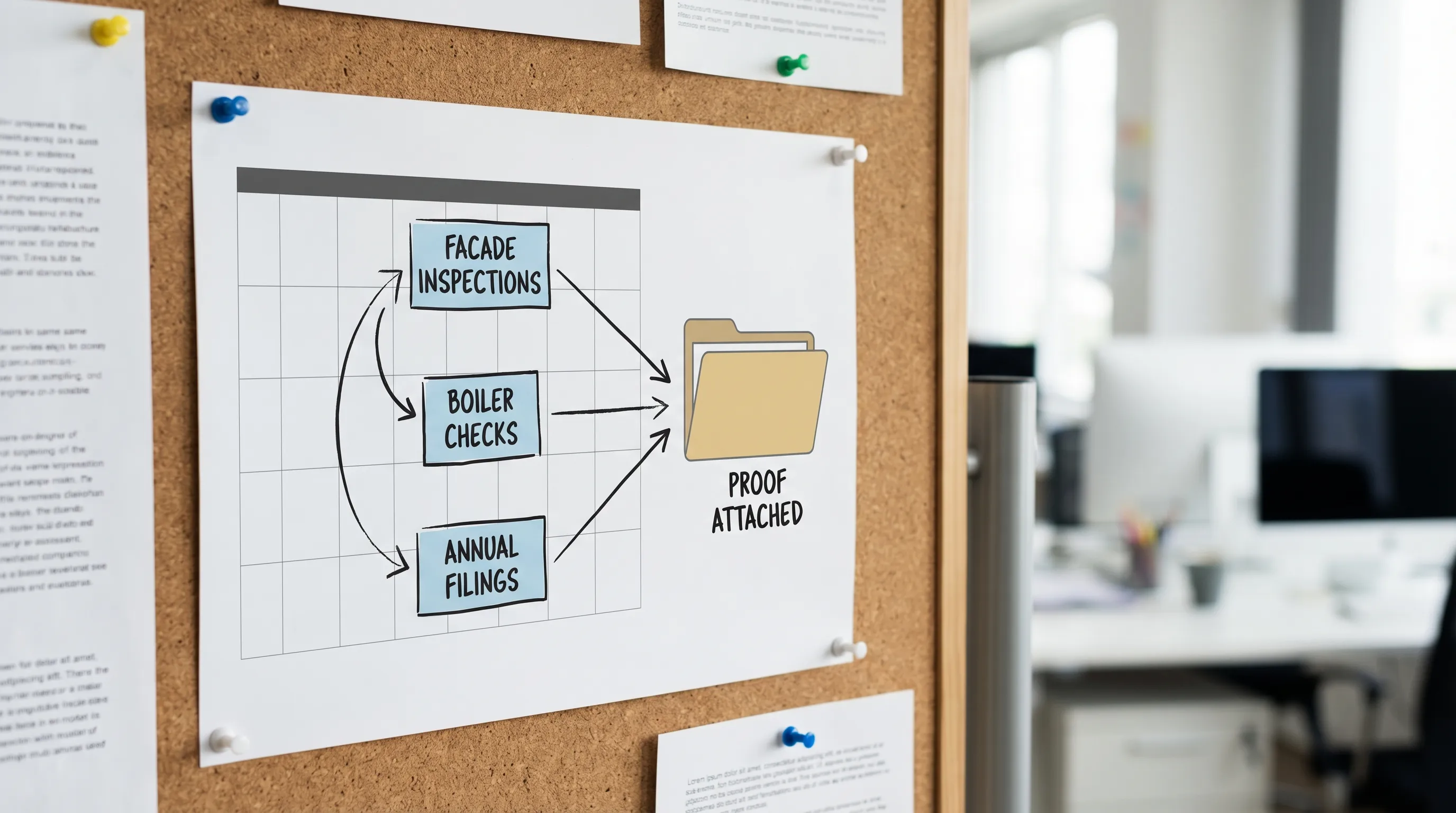
Self-managed boards usually fail in two places: deadlines and documentation. A platform should help you track both, not just store files.
Look for a system that can:
- Create recurring reminders and assign owners (not just “events”)
- Attach proof to each task (inspection report, filing receipt, invoice, photos)
- Keep an audit trail of who uploaded what and when
NYC-specific items your platform should be able to organize (at minimum):
- Facade work (FISP / Local Law 11): reports, engineer contracts, closeout letters, DOB filings
- Boiler and fuel-burning equipment: inspection/permit paperwork, service logs
- Elevators (if you have them): inspection/testing records, service contracts
- FDNY (common in larger or mixed-use buildings): fire alarm/sprinkler/standpipe inspections and certificates where applicable
- HPD items if you have violations: correspondence, proof of correction, schedules
- Energy and emissions obligations that may apply by building size (benchmarking and emissions planning): track filings, consultant reports, utility data access
Useful references when you are sanity-checking what applies to your building:
- NYC DOB Building Information Search (permits, inspections, complaints)
- NYC HPD building information and violations
- FDNY Certificates of Fitness overview (if your building has systems that require it)
2) Document control: can you answer “where is that?” instantly
A platform is only helpful if your next treasurer can find last year’s boiler invoice and the current insurance binder without texting three former board members.
Checklist for board-grade document management:
- Search that works (by filename and within PDFs)
- Permissions by role (board-only vs shareholders/owners vs vendors)
- A clear folder structure you control (not a vendor’s mysterious “projects” view)
- Versioning so “Final_FINAL2.pdf” stops happening
- Retention-friendly exports so you can download everything if you switch tools
Practical NYC files you will be asked for repeatedly:
- Offering plan / amendments (co-ops), bylaws, house rules
- Proprietary lease (co-ops) or condo declaration/bylaws
- Insurance policies, certificates, and claim history
- Reserve studies (if you have one), capital plans, major proposals
- DOB/HPD/FDNY correspondence, engineer reports, permits, sign-offs
- Vendor contracts and W-9s
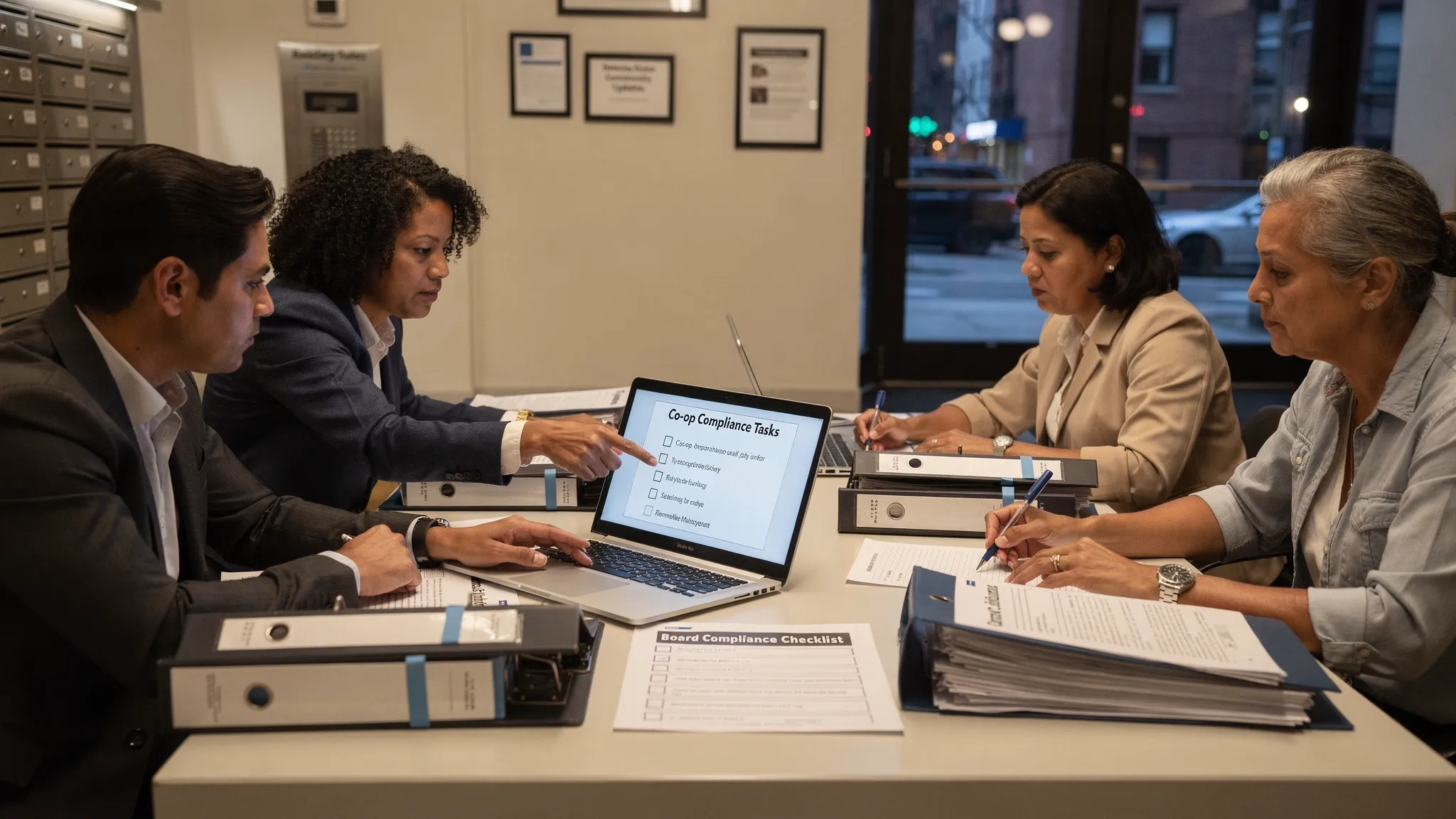
3) Communication: replace email chains with a single source of truth
Most “board drama” is really just missing context: someone did not see the last thread, the attachment is lost, or decisions are buried in Gmail.
A property management platform should give you:
- Board-only discussions tied to a topic (roof leak, hallway painting, delinquency)
- Decision capture (what was decided, when, and by whom)
- Owner/shareholder announcements with read receipts or at least a posting log
- A clean handoff when board members rotate off
If the tool cannot reduce your email volume in the first month, it is not a platform, it is another inbox.
4) Maintenance workflow: small-building friendly, not “enterprise tickets”
You do not need a call center. You need a way to track recurring maintenance and avoid losing vendor threads.
Look for:
- A simple intake method (email-to-task or a form)
- Assignment and status (new, scheduled, waiting on vendor, complete)
- Attachments on the task (photos, proposals, invoices)
- A lightweight vendor directory (contacts, COI, contract dates)
NYC reality check: you will use this most for leaks, boiler issues, intercom/electrical, roof patches, and facade items. The platform should make it painless to attach photos, proposals, and “before/after” evidence in one place.
5) Financial coordination: support the treasurer without pretending to be accounting software
For most self-managed buildings under 50 units, you already have a bank, a bookkeeper or accountant (even part-time), and maybe QuickBooks. The platform should support governance and visibility.
Checklist:
- A place to store monthly financials and board packets
- Approvals for big spend (recording bids, votes, and signed proposals)
- Delinquency tracking notes and letters (restricted access)
- Budget and reserve documents accessible to the board
If a platform pushes you into replacing your entire accounting setup when you do not want to, that is a sign it was built for a different market.
6) Security and access: treat it like the keys to the building
Your platform will hold sensitive material: arrears, shareholder contact info, insurance, sometimes background checks or alteration agreements.
Minimum security checklist:
- Unique logins (no shared passwords)
- Two-factor authentication
- Role-based access (board vs residents vs vendors)
- Easy offboarding when a board member rotates off
- Clear data ownership and export
7) Onboarding and ongoing effort: can volunteers actually run it?
The best platform is the one your secretary will maintain in February, not the one that demos well.
Pressure-test with these questions:
- How long to set up a basic structure (docs, roles, first announcements)?
- Can you import existing PDFs and folders without a messy migration?
- Does it still work if only one board member is “tech-forward”?
A good rule: if setup requires a consultant, it is probably too heavy for a small self-managed building.
Quick scoring table (use this in your vendor demos)
| Area | Must-have questions | What “good” looks like for NYC self-managed boards |
|---|---|---|
| Compliance | Can we set recurring tasks with owners and attach proof? | A living calendar for FISP, boilers, elevator/FDNY items (as applicable), plus storage for filings and reports |
| Documents | Can we search within PDFs and control permissions? | Board packets, contracts, filings, and governing docs are findable fast, with clean access rules |
| Communication | Can we capture decisions outside email? | Topic-based threads, announcements, and a durable record for board turnover |
| Maintenance | Can we track issues and vendor proposals in one place? | Simple statuses, photos, proposals, COIs, and completion notes tied to each issue |
| Financial governance | Can we store monthly financials and approvals without replacing our accounting? | Treasurer-friendly visibility, not a forced accounting system migration |
| Security | Can we offboard instantly and enforce 2FA? | No shared logins, clear roles, and controlled access to sensitive info |
| Portability | Can we export everything if we leave? | A clean download of documents and records so you are never trapped |
Red flags (you will feel these in week two)
- The tool is “customizable” but you cannot get to a usable setup without hours of configuration
- It is built around leasing, vacancies, or rent rolls, which is not your board’s job
- Residents cannot find basic building documents without emailing the board
- You cannot export your data easily
- Every action generates more email instead of less
Frequently Asked Questions
Do self-managed NYC boards really need a property management platform? If you are relying on email plus a shared drive, you are one board turnover away from losing institutional memory. A platform is mainly about continuity, compliance tracking, and reducing repeat work.
What is the one feature that matters most for NYC compliance? Recurring tasks with assigned owners and the ability to attach proof (reports, filings, invoices). Deadlines are manageable, missing documentation is what hurts.
Will a platform replace our managing agent or accountant? Not necessarily. Many self-managed buildings use a platform to centralize operations while keeping banking and accounting in their existing tools.
How should we handle access for residents vs the board? Use role-based permissions. Residents should get governing docs, notices, and key policies. Board-only should include arrears, vendor bids before award, and sensitive correspondence.
If you want a platform built for small NYC buildings
Boardly is a management platform designed specifically for NYC co-op and condo boards in small buildings, with a focus on keeping documents, communication, and operations in one place. If you are comparing options, you can see whether it matches this checklist at Boardly.
Editor's Note
Ready to stay ahead of every building?
Boardly gives NYC boards and property managers the tools to stay compliant, organized, and on the same page.
Get Started Free